



healthy culture, healthy business

A strong business culture isn’t about perks or posters on the wall—it’s how people behave when no one’s watching. It’s about psychological safety, accountability, and trust. Get that right, and the business follows. Get it wrong, and even the best strategy will struggle.
What Does a Healthy Culture Look Like?
In healthy cultures, people feel safe to speak up, know where they stand, and trust their leaders. Conversations are honest and direct. Expectations are clear. Leaders stay close to their teams—not aloof. Culture isn’t left to chance—it’s built with intent.
In one organization we worked with, the culture had become unsafe and indirect. After is was neglected for years. And toxic behaviors took place. Issues were buried, performance was glossed over, and managers kept their distance. We implemented a series of leadership habits and brought them into the routine: regular one-on-ones, coaching managers to be present, and building accountability. Slowly, trust returned. With it came a spike in engagement—and a measurable growth in results. Culture wasn’t the side story. It was the enabler.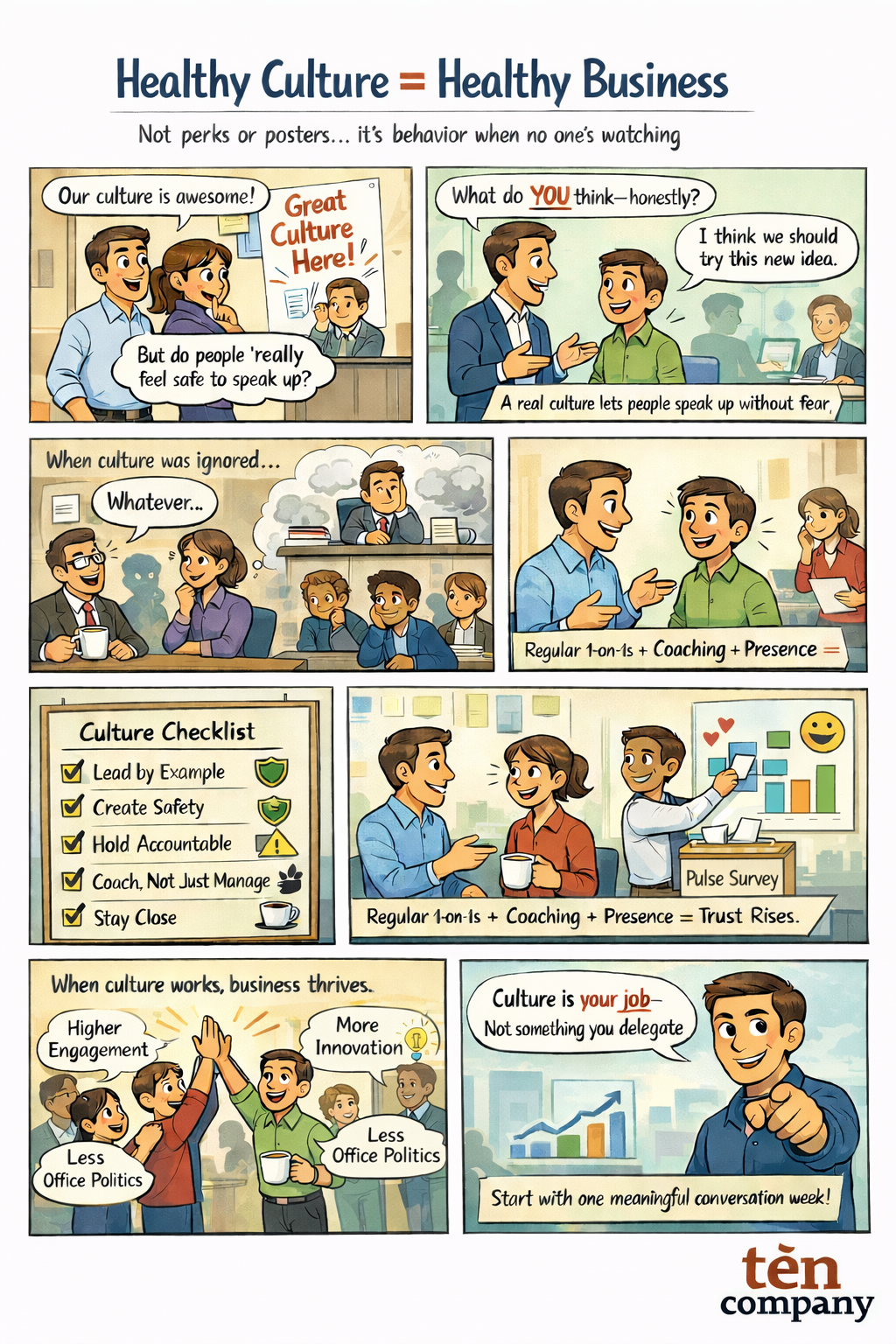
How to Build It
-
Lead by Example: Culture starts at the top. Be consistent, approachable, and clear in your expectations.
-
Create Safety: Make it okay to speak up. Listen more than you talk.
-
Hold People Accountable: Be clear on standards. Tackle underperformance with honesty and care.
-
Coach, Don’t Just Manage: Develop your people. Take a genuine interest in their growth.
-
Stay Close: Make time for regular conversations—beyond tasks. Connection drives trust.
How to Maintain It
Culture is like any relationship: it needs care. In one client organization with a consistently strong, people-centric culture, we helped managers build ongoing dialogue with their teams. Not grand programs—just consistent presence. They check in regularly, offer growth paths, and act when concerns surface. The culture there fuels their performance year after year.
To monitor progress, we sometimes use a simple quarterly pulse survey. Just 5 questions. Anonymous. It tracks sentiment, highlights blind spots, and—crucially—gives people a voice. Data keeps us honest. Anecdotes matter, but evidence builds trust.
The Business Benefits
-
Higher engagement and retention
-
Faster decision-making and better teamwork
-
Increased ownership and innovation
-
More trust, less politics
Leaders: culture is your job. Don’t delegate it. Chef sache. Start with one meaningful conversation this week—and follow it up. The return on culture is real, but only if you show up.
Hope this inspires.
Paul Donkers
Paul P.J. Donkers is a global business coach and management consultant. Together with his partners at tèn company, he has spent decades working with leadership teams to navigate transformations and unlock sustainable value. You can find out more about their work at tencompany.org or through the Ikigai Coaching Institute. For a confidential conversation, feel free to reach out via This email address is being protected from spambots. You need JavaScript enabled to view it..